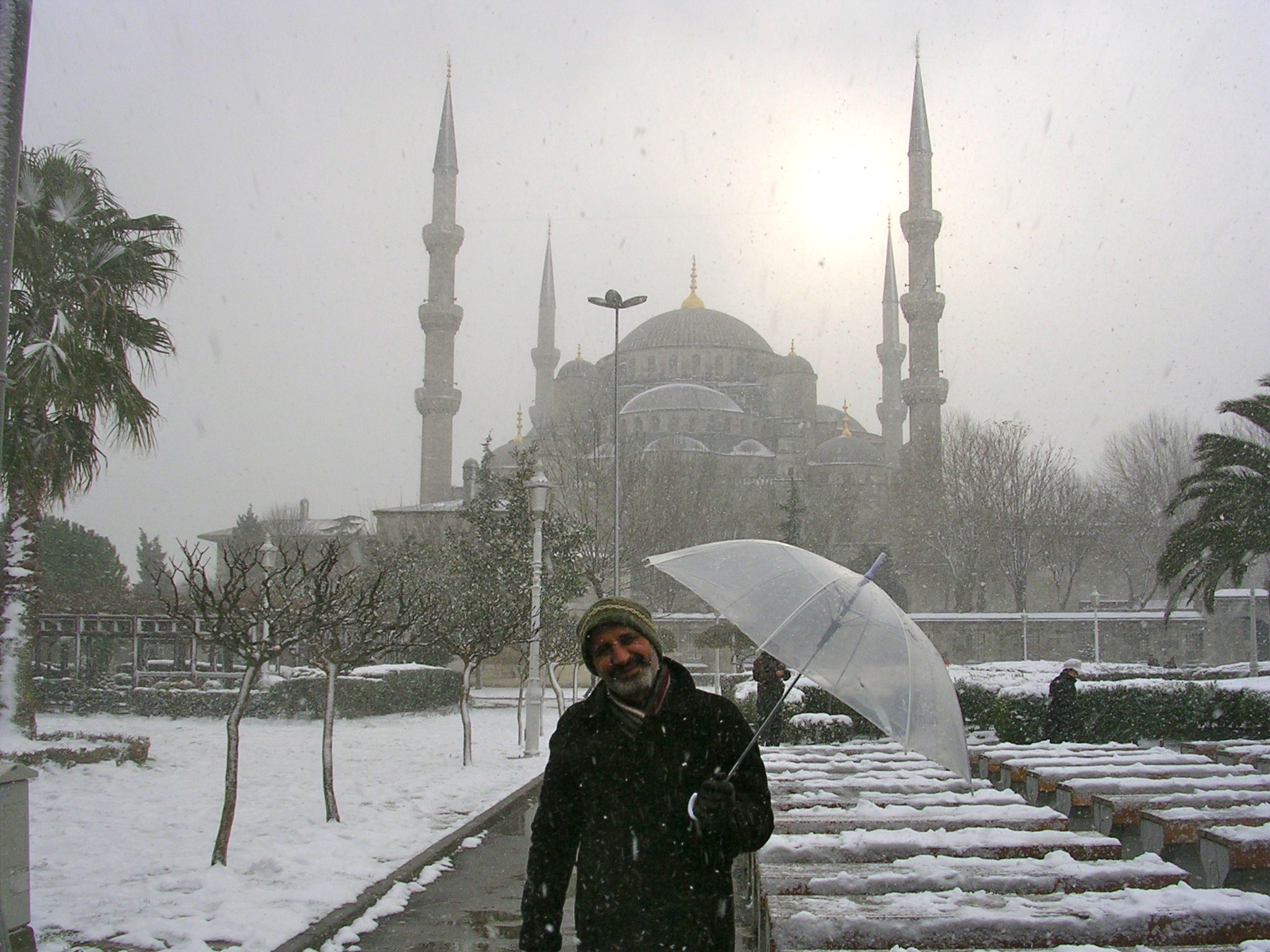
Blue Mosque January 2012
The 1st of March, Abit’s birthday. An exceptionally snowy winter in Istanbul, spent designing new rugs and home décor, planning 2012 workshops and our spring craft trip east. Living in a visual world of patterns and images instead of words, writing and blogging were set aside for a time, waiting until I refound my creative balance between left and right brains.
Life was humming along at a productive, relaxed pace.
The landlord of our small but well-located Kadirga apartment with a view called. He’s sold our home to a man who planned to convert it plus the unused bird-infested attic upstairs into tourist accommodation immediately; construction work would start the next day. We’d have a month to find a new place, though the new owner hoped we’d be gone well before then.
After 30 days of 8am to 11pm sawing, hammering and other ear-splitting noise of the crew overhead – Sundays included – we’d had no luck finding anything nearby not in a basement, or targeted for short-term stays at astronomical rates. The new owner cut our utilities several times, and refused to repair the broken elevator, forcing his own crew to lug materials up 8 flights of narrow spiral stairs.
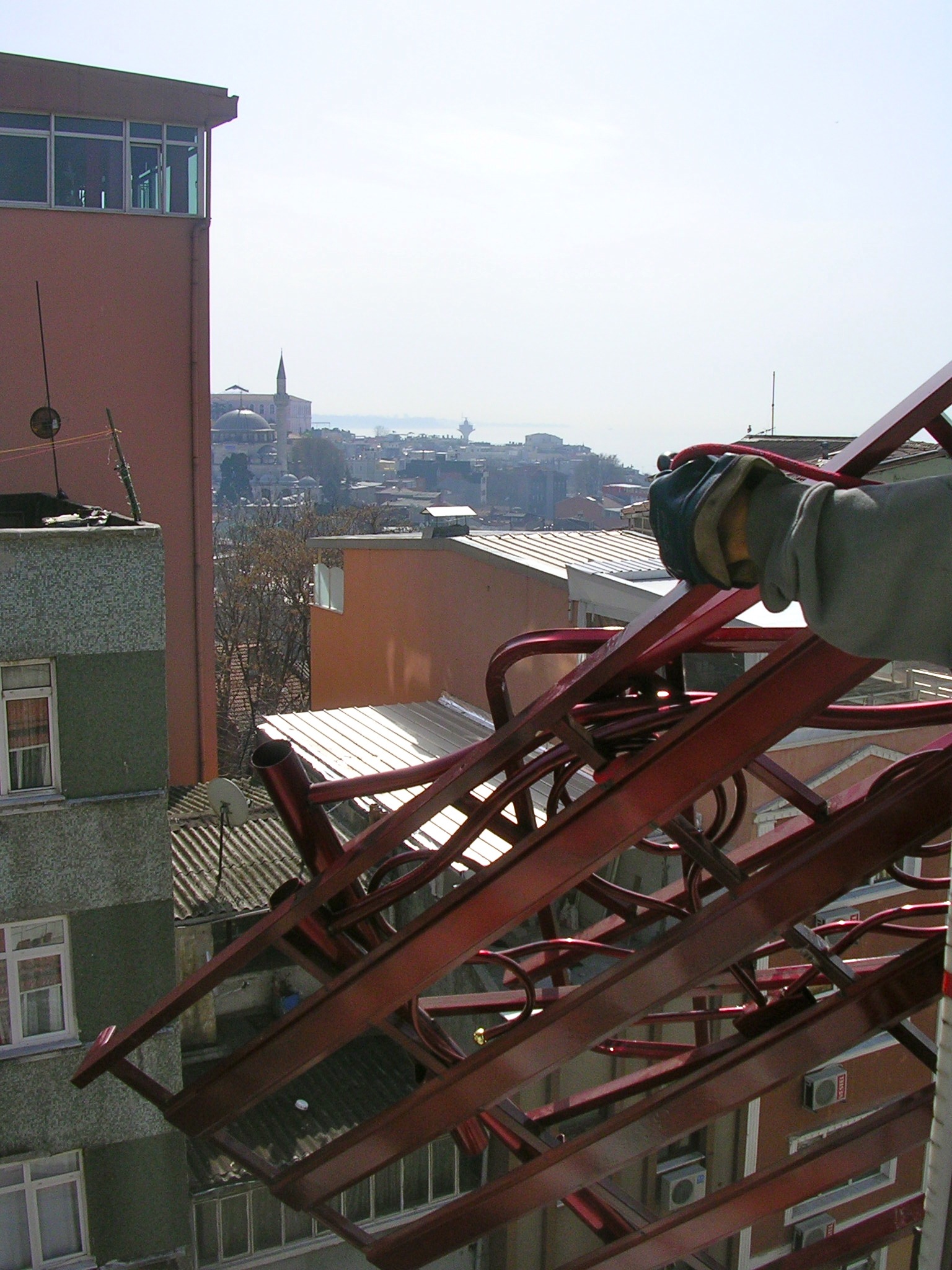
No elevator and 8 floors up? Simple…we have a strong rope
That last Sunday, April Fool’s Day the 1st, dawned bright, though storm clouds loomed across the Sea of Marmara. My role in our move was packing and checking leads on ‘emlak’ (real estate) websites, while Abit walked the streets and talked to everyone. Word of mouth is the best way to find a place; estate agents can be helpful, though their fee adds another month of rent to moving costs. Listings were numerous but dreadful, each looking at best like the anonymous housing we’d lived in when I first moved to Selcuk, basic boxes with small crumbling balconies viewing the neighbor’s laundry.
“Let’s go to Samatya” Abit said over brunch.
Samatya? I’d only become aware of it when US VP Biden made a short visit to its market while in Istanbul in December. A fishing village on the Sea of Marmara dating back to pre-Byzantine times, the name comes from the Greek word for ‘sandy’. Its southeast-facing beaches formed a natural shelter just west of ancient Roman harbor recently discovered near Yenikapi. Samatya, home to a large, prosperous community of Greeks, then Armenians, was built on the site of a 4th C Byzantine monastery, and the 11th C Armenian Surp Kevork, known in Turkish as “Sulu Manastiri”, meaning ‘water monastery’.
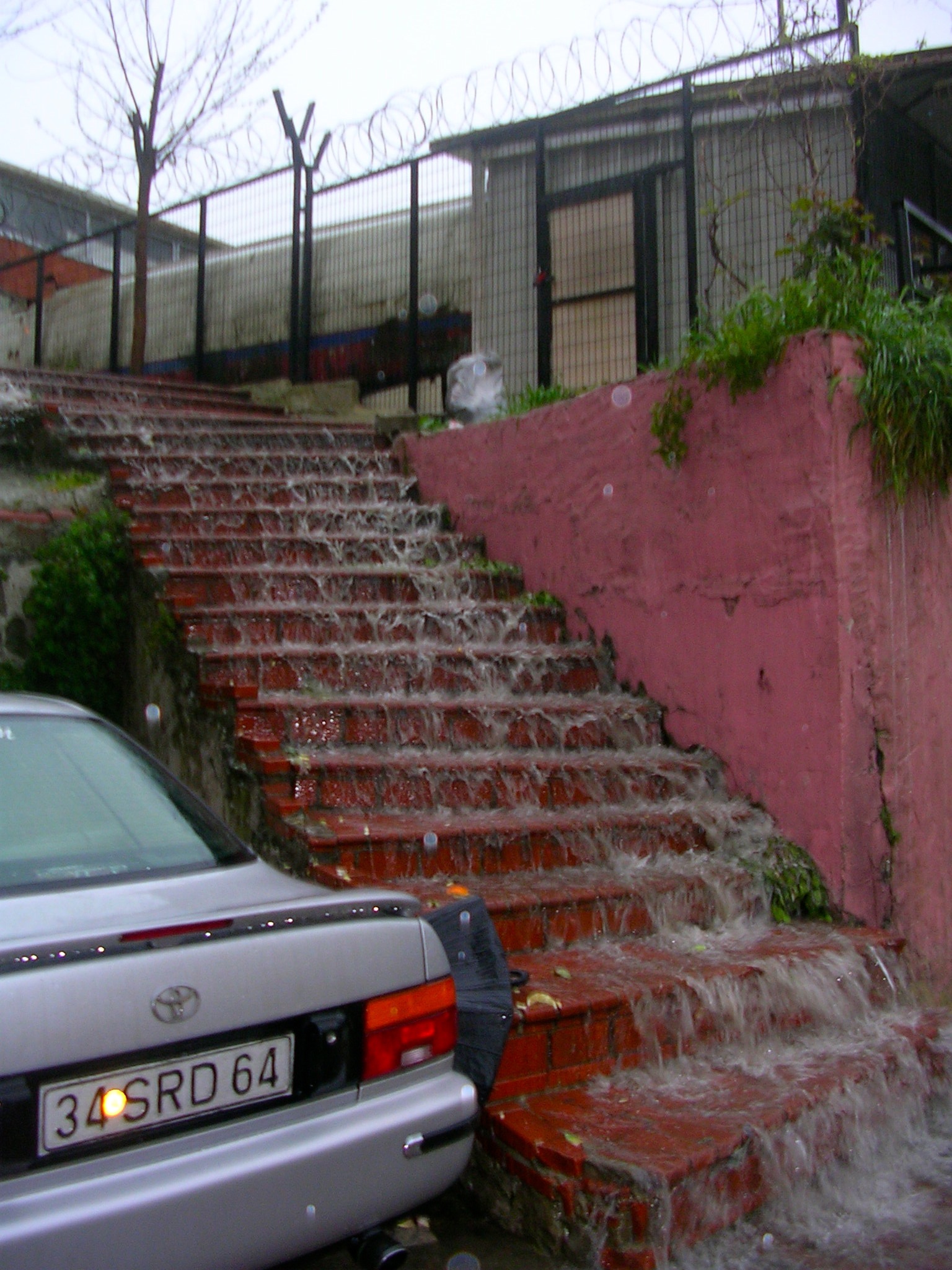
Stairs below the “Water Monastery”
As we arrived that Sunday looking for a new home, the skies opened in a torrent of rain. No umbrella with us, we stopped under a shop awning and grinned at each other. The rain was a good omen, since such rain has graced other important days in our life together.
Taking shelter upstairs in a restaurant on the main square overlooking the sea, filling with families out for a Sunday afternoon meal, we chatted with the waiter from Diyarbakir and learned that though Samatya still had a small but thriving Armenian community, the majority of residents were now from southeastern Turkey. I drank coffee while Abit visited the local emlakcilar. It’s best not to bring the American wife along at first, and on this day, it proved wise.
After looking at a few apartments, Abit stopped to read the postings at a small estate office. One of the men sitting inside at a desk was drinking raki. “Hey, your business is so good you can afford to be drinking at work on a Sunday afternoon? I guess you won’t be interested in showing me what’s available.” The emlakci’s partner jumped up before the insulted drinker could reply. “Sure, we know everyone. We’ll find you a place.”
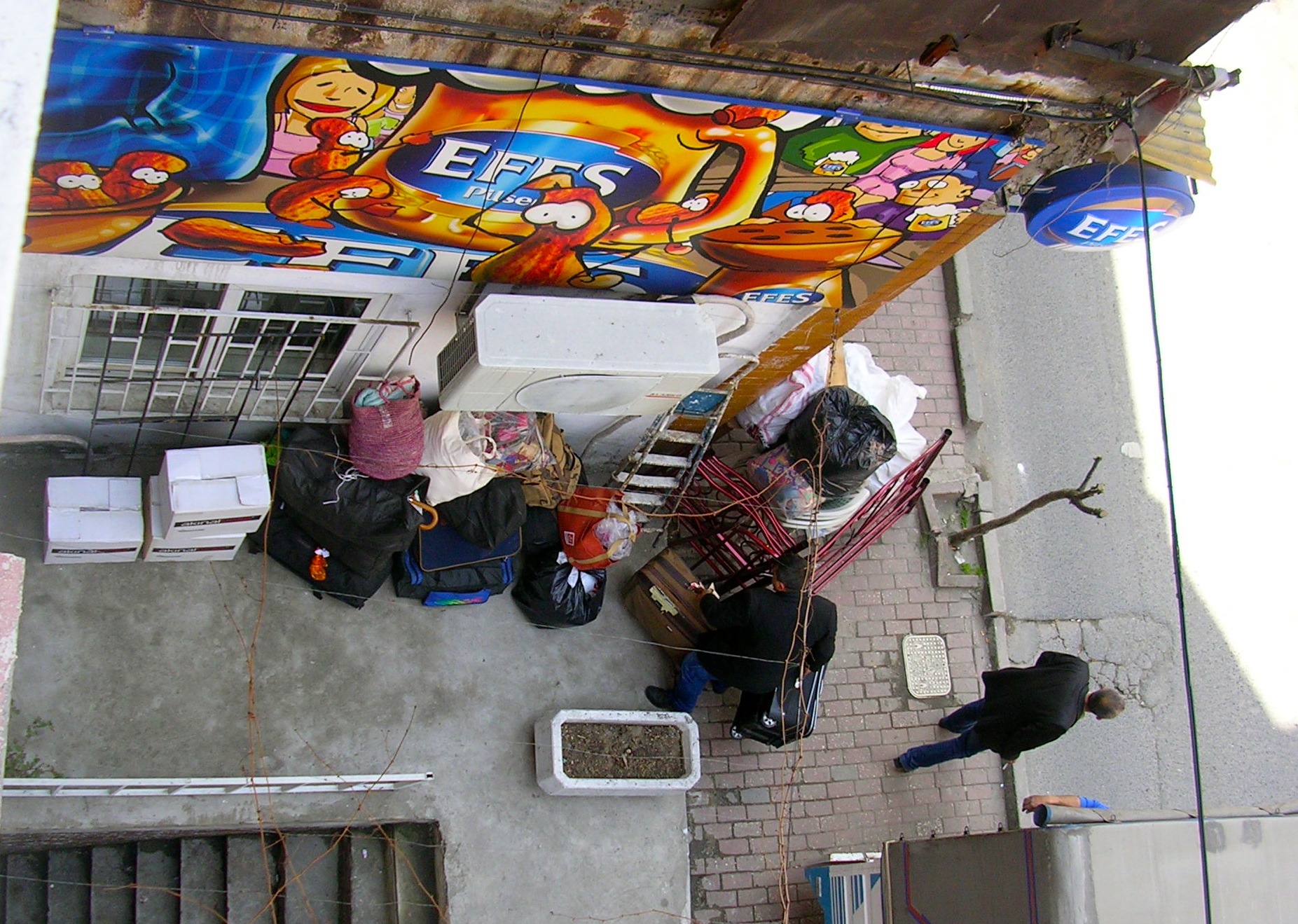
Our new home’s exterior offers no hint of what’s upstairs
Eliminating a few predictable, clean but boring boxes he was expected to want, in the hills rising above the main square, a frustrated Abit reiterated that he was in need of a home with a view. “Well, there is a place just across the high street here, behind all the restaurants on the square. But no one wants it because it’s an old building with no central heating. It does have a view though….”
A half hour later, Abit bounded up the stairs of the restaurant where I sat waiting. “Come see our new home”. I’m used to having a husband who finds things – houses, shops, rugs, new friends – but frankly, he boggled my mind this time with his luck, or sixth sense, or karma. Whatever it may be, our new home in a 60-year-old building (a sturdy infant compared to the age of the surrounding churches) does not yet have heat. But it certainly has a view.
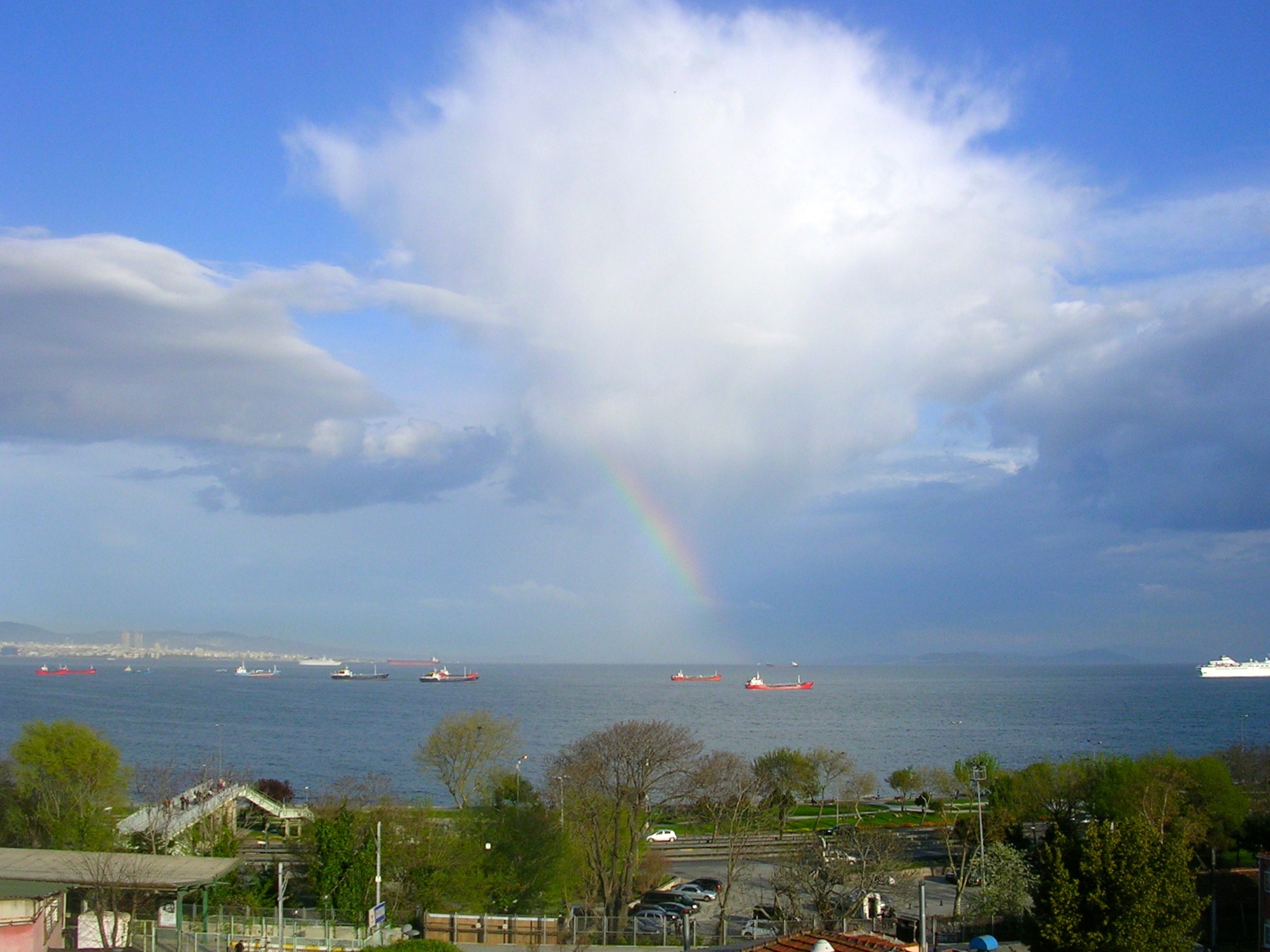
Rainbow over Marmara
Tuesday, we signed the lease; Friday, we moved. By Saturday night, Abit had planted a garden. In the time since, we’ve created two floors of home, full of everything vintage we love, all gathered for next to nothing from within a block or two of our new door. We’ve traded the damp scent of burning wood from Kadirga’s 1505 hamam for the smell of grilling fish, baking bread and sea air. We’ve met distant relatives from Mardin – by chance, they own the small liquor store across the street. Also across that street is the Church of St Menas; how appropriate that he’s the patron saint of traveling merchants.
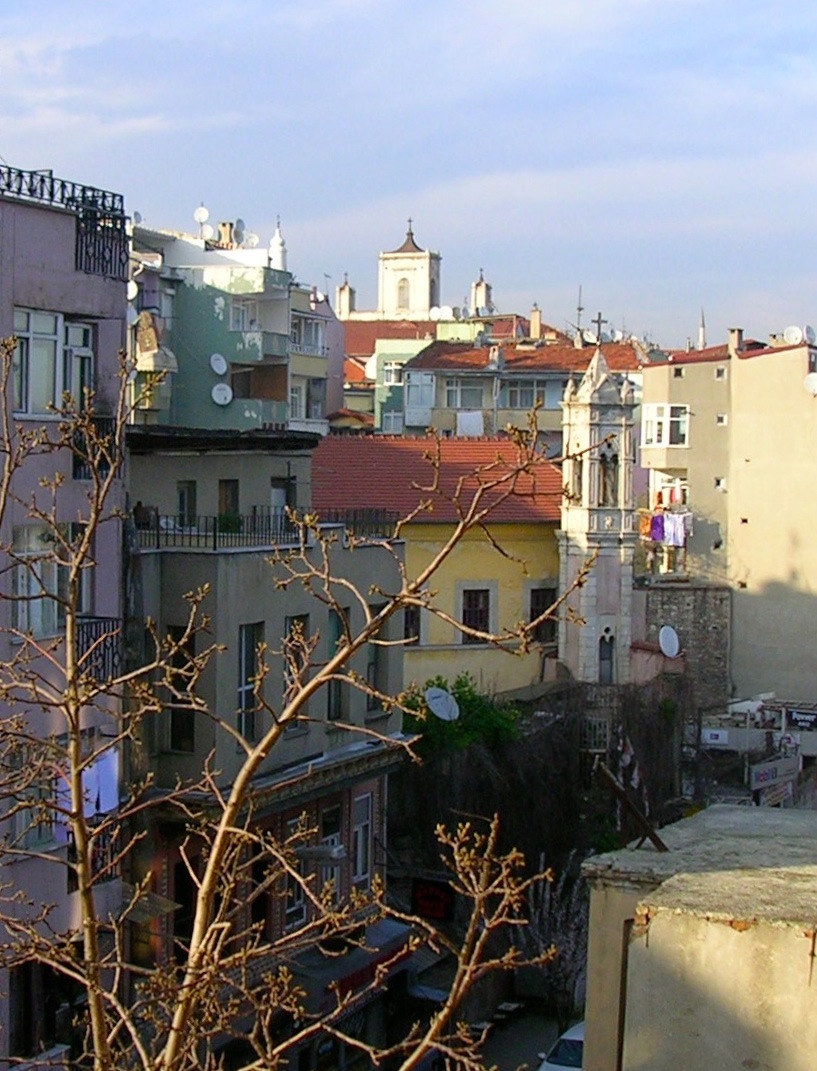
In front: St Menas, over Empress Helena’s 4th C martyrion. Behind: The bell tower of Surp Kevork to the right, the white minaret of Mimar Sinan’s 1533 Abdi Celebi Mosque next door just visible to the left.
Samatya’s shifting sand was waiting for us to find it, to broaden our horizons in a sea change; the same sea, only now much bigger. Our workshop plans were delayed, our trip to the southeast not happening until this fall because of the increasing chaos in Syria. But as we now shift into summer, the workshop has a large garden home with plenty of space, a 10-minute train ride along the sea from Sirkeci.
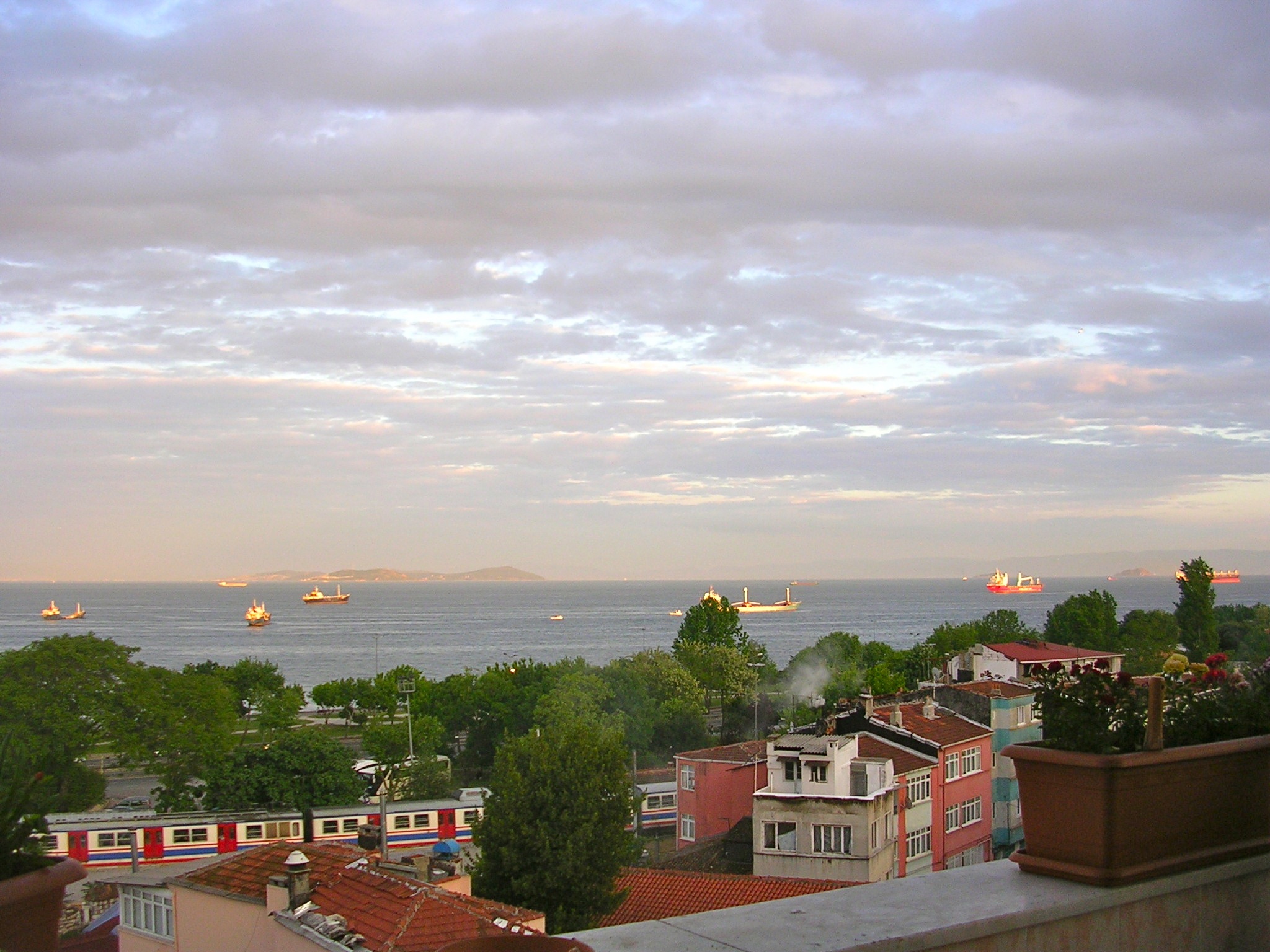
Kocamustafapasa Station, at the seaside. Princes Islands beyond
“Move and the way will open” is a Zen lesson we’ll remember. Storm clouds will gather, bringing uncertainty. The road is guaranteed to change beyond our control.
Bazaar Bayar Samatya. Bloom time…
But this spring we’ve again learned to pivot, then replant.
I love your telling of this story. Love, love love.
Thanks Tara! Means a lot as I ease into writing again. More to follow…
What a beautiful telling: a story of new beginnings. Your tags list “winter” but of course it’s about spring and renewal.
I could not resist the contrast of that extremely snowy day pic with that of the garden. Reminds me of the progress made in a short time if at times it doesn’t feel like it. Thanks, Julie!
It looks SO beautiful there, Catherine! How peaceful…. I hope that you are settled in now and can focus on all of your projects.
What will you do in the winter? What kind of heating will you use? That worries me………………. 🙁
I live in a drafty old house and have caulked and done whatever I could to keep the cold out. I had one gas heater on the wall and space heaters, but the space heaters are very expensive. This past winter, I got a second gas heater installed (one in the kitchen and one in the living room) and for the first time it felt livable here…
Thanks for your concern, Rachel – part of of deal with the landlord is that he saves our rents this summer and installs efficient gas heat/radiators this September downstairs, and upstairs in our living room. We’ve just been able to turn off our one small space heater – you’re so right about them sucking energy! More pics soon…
Good for you ! What a miracle ! And lovely views too. Love the winter pic … I’ve always particularly loved the look of Istanbul in snow …
Thanks Bron! “Miracle” is a good way to describe how we ended up, from bleak to remarkable. Love how life does that! And yes, I also love how it looks here in the snow. As long as I don’t have to leave the house much…
Catherine,
Life seems to bring so many changes, this sound delightful and best wishes on the new house.
hope our paths cross again. maybe in Kusadasi or Selcuk this summer?
Rita
Rita, would be great to see you and Sinan in Selcuk…we’ll be there in July for a cousin’s wedding. Will email you!
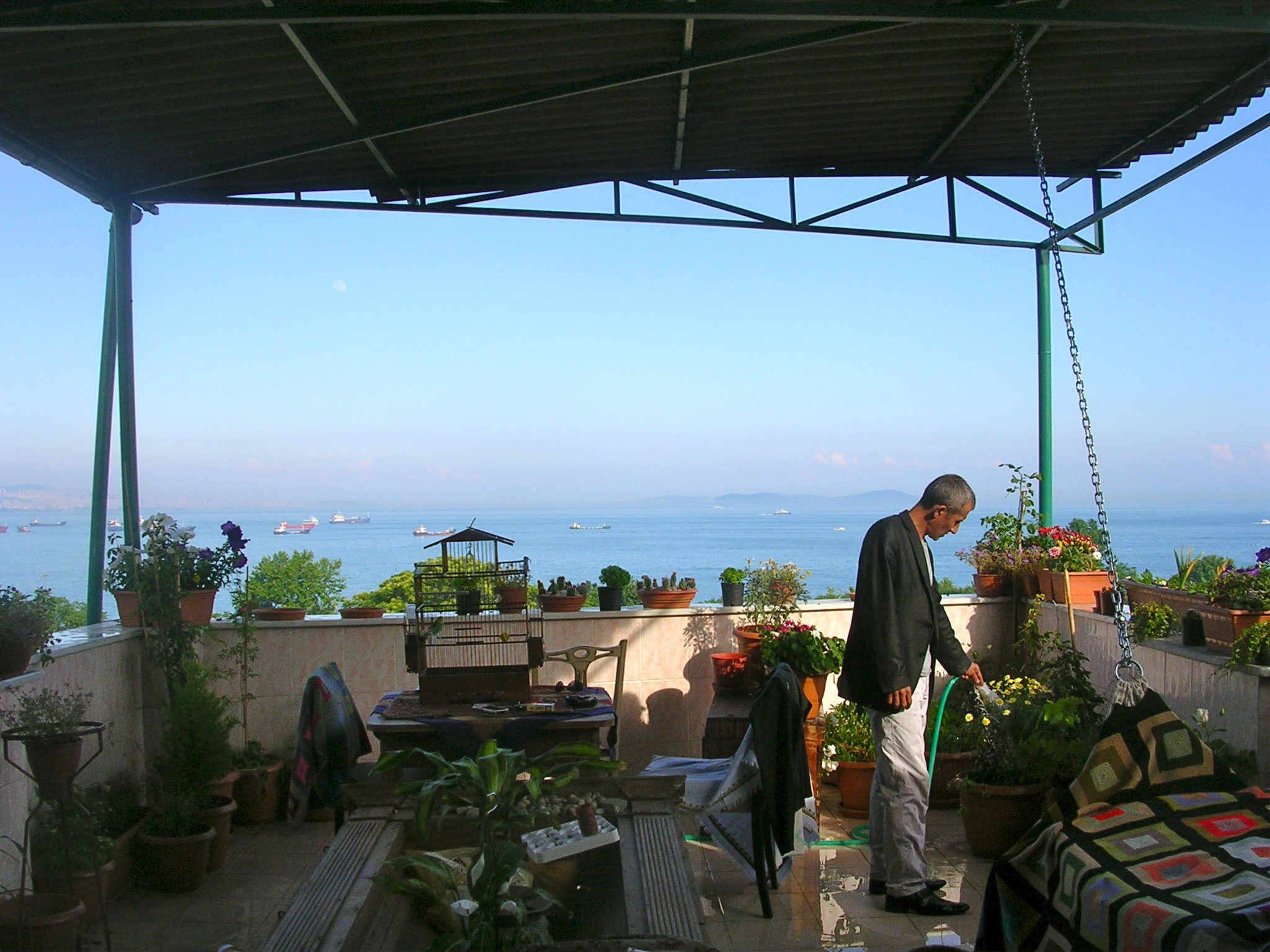
What a beautiful view. Knowing you, Catherine, it will look like “home.” I especially liked the photo of Abit watering your garden with the view beyond. Happy to read (below) that you will be warm in the winter. So pleased that you keep in touch.
Half of us had our every-other- year trip to Yosemite in May: school and college reduced our numbers. John and Rox are hosting all of us in July for a weekend.
Love to you, Margo Chapman
Margo, thank you – it does look and feel like home, though we have a very long list of projects to complete with all the vintage furniture we’ve found. Will be posting projects here as we go… Enjoy your family gathering next month, and please give everyone our love!
Congratulations on your new home! How far from Istanbul? Thanks for sharing your story Catherine! Dora in NYC
Thank you Dora! Still in old city (within the walls) Istanbul, 10 minutes or so west by train from where we used to be. As you know, this city is huge, so we’re lucky we didn’t have to move further away.
Dang girlfriend, that roof terrace and view rock! I just toured Samatya last Thursday and I thought I remembered you saying you lived there. Well done.
Thanks! Who were you touring Samatya with? We have a friend who does walking tours here…